
-
Root Canals Don’t Have to Be Scary: Saving Your Tooth with Confidence
When most people hear the words “Root Canal Therapy,” they instantly cringe. However, modern root canal treatment is far less painful than its reputation suggests—and it’s the most effective procedure we have for saving a severely infected tooth!
At Dental Heights, our commitment to General Dentistry includes providing expert Root Canal Therapy in a calm, supportive environment. We focus on making the procedure comfortable and ensuring you understand every step.
Why Do I Need a Root Canal?
A root canal is necessary when the pulp (the soft tissue inside your tooth containing nerves and blood vessels) becomes infected or inflamed. This usually happens due to:
- Deep decay or cavities that reach the pulp.
- A chip or crack in the tooth.
- Repeated dental procedures on the same tooth.
The infection is what causes the severe pain. The root canal procedure removes the source of the pain and saves the tooth from needing to be extracted.
The Root Canal Process: Comfortable and Straightforward
Forget the myths—this procedure is very similar to getting a filling, but it takes a little longer.
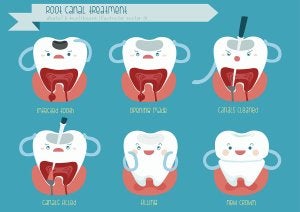
- Numbing: We begin by thoroughly numbing the area. You should feel no pain during the procedure.
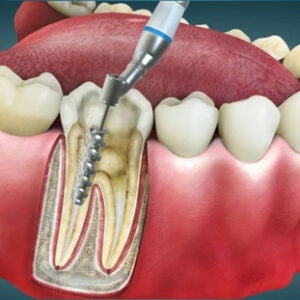
- Cleaning: The dentist creates a small opening in the crown of the tooth and removes the infected pulp, nerves, and bacteria.
- Sealing: The inner chamber is cleaned, disinfected, shaped, and filled with a biocompatible material.
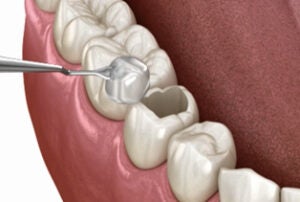
- Restoration: In most cases, the tooth will be protected with a Dental Crown to restore its shape, strength, and function, allowing you to chew and smile normally for years to come.
The Benefits of Saving Your Natural Tooth
Choosing a root canal over an extraction has significant long-term benefits:
- Natural Function: You retain your natural ability to chew and speak.
- No Shifting: It prevents surrounding teeth from shifting into the gap.
- Less Expensive: It is often a more Affordable Dental Care solution than replacing a tooth with a bridge or implant (though we offer those too!).
At Dental Heights, we are dedicated to listening and collaborating with each patient to meet individual needs, especially when addressing a concern like a root canal. If you have severe tooth pain, don’t ignore it. It’s better to get checked and save your tooth!
If you are experiencing tooth pain, schedule your consultation today! Visit https://www.dentalheights.com/ or call (224) 698-1472.
-
More Than Just a Missing Tooth: The Impact of Tooth Loss and How Dental Implants Can Help
Losing a tooth can be a distressing experience. Beyond the aesthetic concerns, tooth loss can have a significant impact on your oral health, self-confidence, and overall quality of life.
At Dental Heights, we understand the challenges of tooth loss. We offer a range of tooth replacement options, including dental implants, to help you regain your smile and oral function.
The Impact of Tooth Loss
While tooth loss may seem like a minor issue, it can lead to a number of complications, including:
- Difficulty chewing and speaking: Missing teeth can make it difficult to chew food properly and speak clearly.
- Shifting teeth: The remaining teeth may shift out of position, affecting your bite and increasing your risk of further tooth loss.
- Bone loss: The jawbone can deteriorate in areas where teeth are missing, leading to changes in facial structure and premature aging.
- Loss of self-confidence: Missing teeth can make you feel self-conscious about your smile, affecting your social interactions and overall well-being.
Dental Implants: A Permanent Solution
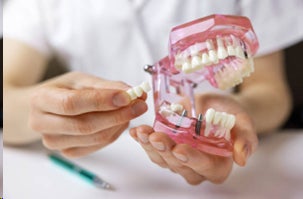
Dental implants are a modern and effective solution for tooth loss. They offer a number of benefits over traditional tooth replacement options like dentures and bridges:
- Natural look and feel: Dental implants look and function just like natural teeth.
- Durability: With proper care, dental implants can last a lifetime.
- Improved oral health: Dental implants help preserve jawbone density and prevent further tooth loss.
- Increased self-confidence: Dental implants can restore your smile and boost your self-esteem.
The Dental Implant Procedure
The dental implant procedure typically involves several steps:
- Consultation and planning: We’ll assess your oral health and discuss your treatment options.
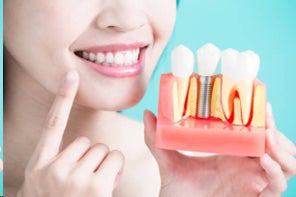
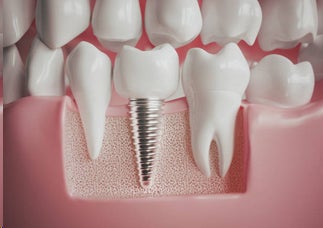
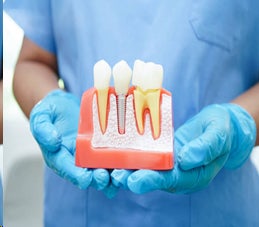
- Implant placement: A small titanium post is surgically placed into the jawbone.
- Healing period: The implant fuses with the jawbone over several months.
- Abutment placement: A connector is attached to the implant.
- Crown placement: A custom-made crown is placed on the abutment to complete the restoration.
Dental Heights: Your Partner in Restoring Your Smile
At Dental Heights, we’re committed to providing personalized and compassionate care. Our experienced team will guide you through every step of the dental implant process, ensuring a comfortable and successful outcome.
Call to Action:
If you’re considering dental implants, contact Dental Heights today to schedule a consultation. We’ll help you regain your smile and confidence!
Visit https://www.dentalheights.com/ or call +1 224-698-1472 to learn more.
-
Come meet Dr. Z!
Hello everyone!
I welcome you to Dental Heights, a family owned and operated general dental practice. My name is Dr. Zishan Bader DDS. We established this office in the summer of 2013 primarily to give the surrounding residents an affordable and up to date dental office for their family’s needs. I must tell you that these past few years have been a blast! We have made so many new friends through the many patients that have walked through our doors. Ive always emphazed a friendly professional environment where our patients feel like they are with those who truly care about the services provided.
A little history on myself:
I went to Lockport Township High School, attended undergrad and dental school at the University of Detroit-Mercy and graduated in May 2009. Ever since, Ive worked tirelessly on keeping myself updated on the latest technology, techniques, and other aspects of dentistry to give true justice to my patient’s experiences with me. I have been blessed to work alongside two great mentors– Dr. Alamdar (my father) & Dr. Shafeeq (my uncle) whom I have learned a great deal from.
I welcome you to come by and meet me personally & my wonderful staff. I can give you a tour of my office and insight on the types of treatments we offer here at Dental Heights!
-Dr. Zishan Bader DDS

-
6 Habits That Harm Your Teeth (And How to Break Them)
Nail Biting
The habit: This nervous habit can chip teeth and impact your jaw. “Placing your jaw for long periods of time in a protruding position can place pressure on it, which is associated with jaw dysfunction ,” says Dr. Ruchi Sahota.
The solution: Bitter-tasting nail polishes, stress reduction and setting small, realistic goals can help. If certain situations are triggers, hold something to keep your fingers busy.
Brushing Too Hard
The habit: Brushing for two minutes twice a day is one of the best habits you can get into. Just make sure you’re not trying too hard. “Brushing with a hard toothbrush, or brushing too hard, can damage teeth and irritate gums,” says Dr. Matthew Messina.
The solution: Use a soft toothbrush with the ADA Seal of Acceptance at the proper pressure. “Don’t think ‘scrub.’ Think ‘massage,’” he says. “Save the hard toothbrush for cleaning the grout in the bathroom tile.”
Grinding and Clenching
The habit: “This can cause chipping or cracking of the teeth, as well as muscle tenderness or joint pain,” Dr. Messina says. “You might also feel like you can’t open your mouth wide or chew with pain.”
The solution: “Relaxation exercises and staying aware makes a difference,” he says. A nighttime mouthguard can also help. “You’ll have less tooth damage, less pain and muscle soreness and better sleep.”
Chewing Ice Cubes
The habit: “Tooth enamel is a crystal. Ice is a crystal. When you push two crystals against each other, one will break,” Dr. Messina says. “Most of the time it’s the ice, but sometimes the tooth or a filling will break.”
The solution: Drink chilled beverages without ice, or use a straw so you’re not tempted. “The risk of chewing ice is greater than any pleasure that comes from chewing it,” he says. “Besides, ice is really cold!”
Constant Snacking
The habit: Grazing all day, especially on sugary foods and drinks, puts you at a higher risk for cavities. When you eat, cavity-causing bacteria feast leftover food, producing an acid that attacks the outer shell of your teeth.
The solution: Eat balanced meals to feel fuller, longer. If you need a snack, make sure it’s low in fat and sugar. If you indulge in the occasional sugary treat, follow it with a big glass of water to wash away leftover food.
Using Your Teeth As Tools
The habit: Your teeth were made for eating, not to stand in as a pair of scissors or hold things when your hands are full. When you do this, you put yourself at a higher risk of cracking your teeth , injuring your jaw or accidentally swallowing something you shouldn’t.
The solution: Stop and find something or someone to give you a hand. Your mouth will thank you.
This great information was from http://www.mouthhealthy.org/en/bad-habits?source=facebook&content=6_habits_to_break please refer for more information on keeping your mouth healthy!
-
Have You Maximized Your 2015 Dental Benefits?

Have you maximized your 2015 Dental Benefits?
This is a friendly reminder that dental benefits do not roll over to the next year. If you have pending dental work, please make an appointment before the busy holiday season so we can help you maximize your dental insurance and improve and maintain a healthy mouth for you and your family!
Call us today at (224) 698-1472!
-
A Patient’s Guide to Cavities
 Having a healthy smile is an essential part of both your physical health and self confidence. By making regular visits to the dentist , you will ensure that your teeth are healthy and in good shape. In the event that you experience the signs of a cavity, you should be sure to visit an office offering family dental near Schaumburg. Your dentist can help alleviate your tooth pain, and can also provide additional support to prevent gum disease and other oral health issues. If you are preparing for a trip to the dentist, here is a guide to the basics that every patient should know about cavities.
 Signs and Symptoms
There are several signs and symptoms that may indicate that you have a cavity. The symptoms of a cavity can vary depending on the severity of the issue, as well as the location of the cavity in the mouth. Some of the most common signs of a cavity include pain in one or more teeth, tooth sensitivity, or pain during eating and drinking.
Causes
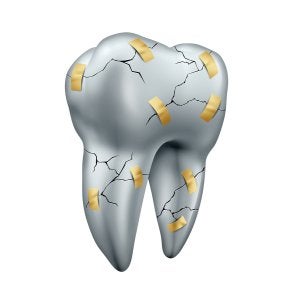
Cavities form when a tooth begins to decay. The primary cause of cavity is due to a substance called plaque. When plaque forms around your teeth, the bacteria that are present in plaque will begin to eat away at the enamel of your teeth. Over time, this process can create cavities, which are holes. Plaque can build up due to poor oral hygiene practices, or can be a natural occurrence due to the structure of your teeth.
Treatment
There are several techniques that dentists can use to treat cavities. If a cavity is very minor, it may be able to remove the damage using a fluoride rinse. More severe cavities may require that your dentist perform a filling procedure. During the filling, your dentist will remove the damaged area of your tooth and fill the area with a new material. Very serious cavities can also be treated with other procedures, such as crowns or root canals.
-
What Are the Symptoms of a Dental Abscess?
 If you are experiencing severe tooth pain, swollen gums, and a fever, you may have an abscessed tooth. A dental abscess is a severe infection that can result from poor oral care, trauma, or gum disease. If you think you have an abscessed tooth, it is important to see a dentist, as you might need to undergo a root canal in Schaumburg .
 A dental abscess is an infection inside the tooth that has spread to the root. This can develop when tooth decay becomes so severe that it reaches the inner pulp. A throbbing and continuous toothache is the most common sign of an abscess. The pain may subside if the pulp dies from the infection, but this does not mean that the infection has healed or that the tooth does not need treatment from a dentist. More serious symptoms of an abscess include fever, foul breath, and a bad taste. You may also experience swelling of the jaw. In some cases, you may see an open sore on the side of the gum near the infected tooth.
-
Understanding the Importance of Preventative Dental Care
 Everyone wants to have a beautiful, healthy smile that they can show off. With a good at-home oral care routine plus regular visits to an office that offers family dental care in Schaumburg , you’ll be on your way to having a great smile. Some people choose to visit the dentist only when they’re experiencing tooth pain or other issues, rather than on a routine basis. However, preventative dental care is important because it can help detect minor dental issues before they become major problems. Read on to learn more about the importance of preventative dental care.
 Risk Assessment
When you visit your dentist, you’ll receive a thorough cleaning as well as a comprehensive evaluation of your oral health status. Your dentist will examine your teeth as well as your diet and lifestyle habits to provide you with a picture of whether you’re at risk for cavities. The dentist will also evaluate your risk factors for gum disease , taking into account your current dental health, age, habits, and gum health. As you begin to get a picture of how at risk you are for oral issues, you and your dentist can come up with a plan to help minimize these risks going forward. This might mean changing your diet or adjusting a few of your habits, or it could simply mean committing to regular visits to the dentist’s office.
Early Prevention
There are a number of dental issues that can grow worse over time without treatment, including gum disease, decay, and teeth grinding. During your dental appointment, you’ll receive x-rays and possibly other imaging tests that will reveal any issues that can’t be seen with the naked eye. If your dentist does spot a small cavity, you’ll be able to have it taken care of now instead of waiting for it to get worse. Issues such as cavities that are allowed to progress untreated can become serious, potentially even leading to the need for a procedure such as a root canal. Instead of gambling with your oral health, visit your dentist on a regular basis for preventative care.
-
What Toothpaste Is Right for You?
It can be overwhelming to walk down the toothpaste aisle in a grocery store or pharmacy. With so many choices of toothpaste available, you might not know which one to choose. Brushing your teeth is essential for good dental health and preventing gum disease in Schaumburg . Take a look at this video to learn more about toothpaste and how to determine which one is right for you.
The most important ingredient to look for in a toothpaste is fluoride. Fluoride helps strengthen tooth enamel, protecting you against decay. Toothpastes come in a wide variety of flavors, so chances are you’ll be able to find one that you like whether it has a mint or fruit taste. People with sensitive teeth may want to choose a toothpaste specifically designed for this condition to help block the hot and cold sensations that can lead to discomfort. Your dentist can provide you with a recommendation if you are still unsure of which toothpaste to choose. A good rule of thumb is to look for the seal of approval from the American Dental Association, as products with this seal have undergone rigorous testing to make sure that they do what they claim to do.
-
What Happens After a Root Canal?
Root canal therapy alleviates not only tooth pain but also tissue infection. This video explains why seeing a dentist near Schaumburg for an infected tooth is so important.
When a tooth has an infection, it cannot expand to accommodate the growing bacteria inside it, which is why sufferers feel pain. The longer this infection persists, the more damage it can do to the tooth and bone surrounding it. A dentist performs a root canal to remove the infection and the potentially destructive pressure that it creates. As a result, after root canal therapy, patients often feel little to no pain when leaving the dental office. Their discomfort is gone, but equally important, their teeth are no longer vulnerable to the damaging effects of an infection.
RECENT POSTS
categories
Archives
2026
2025
2017
2016
2015
- October (1)
- September (2)
- August (4)
- July (4)
- June (5)
- May (4)
- April (4)
- March (5)
- February (5)
- January (5)